What the second axle on a tandem flatdeck trailer actually buys
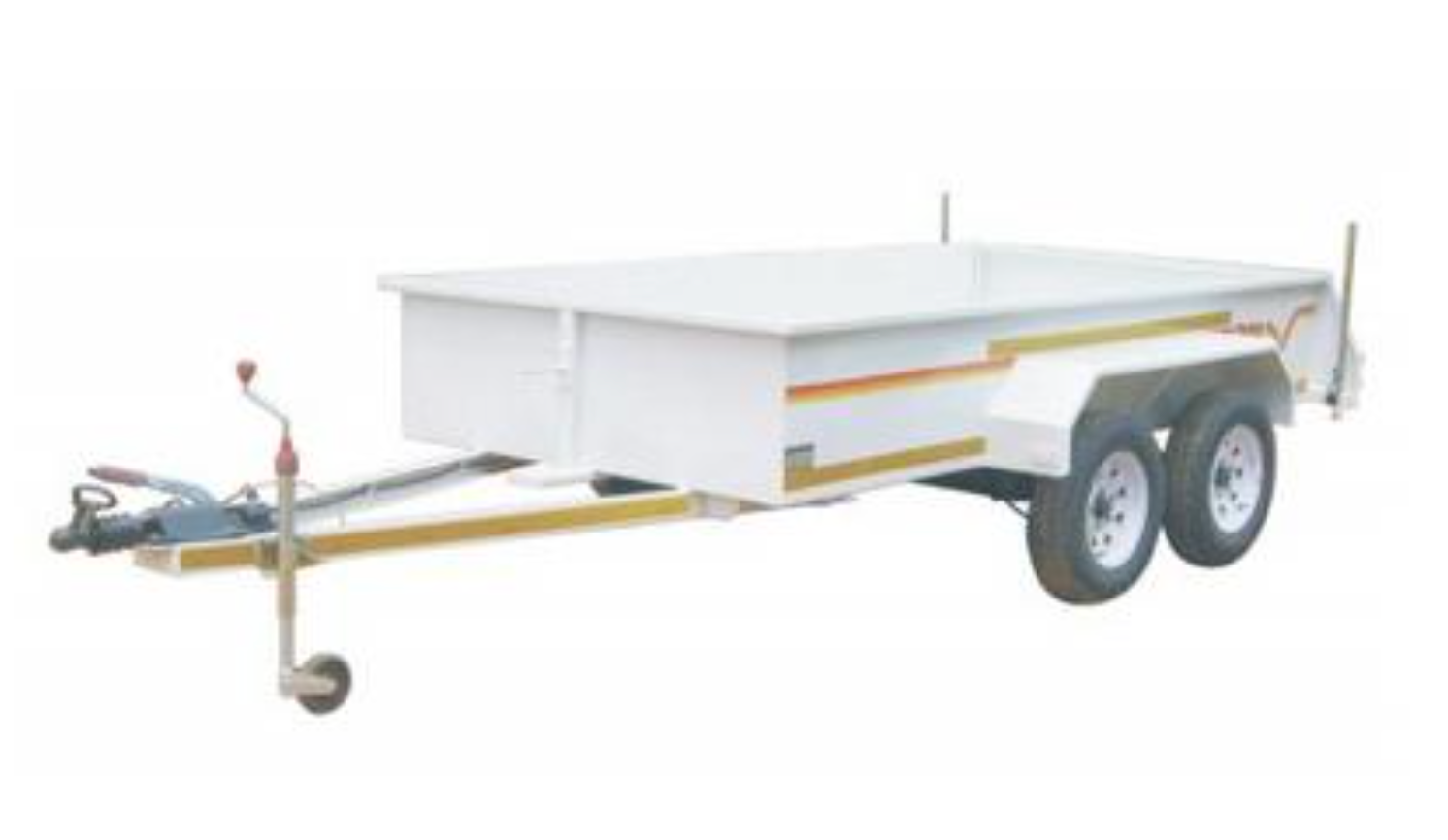
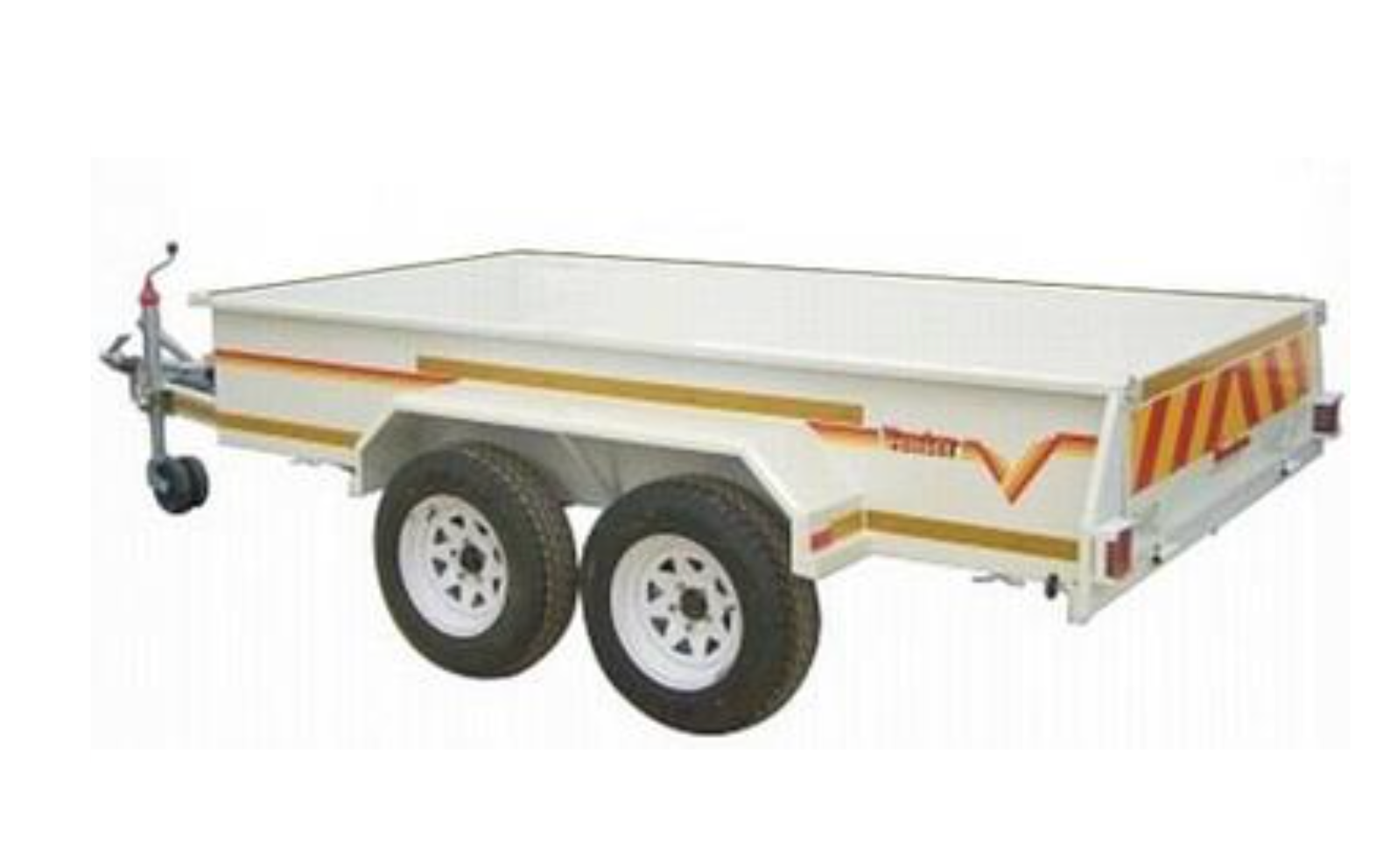
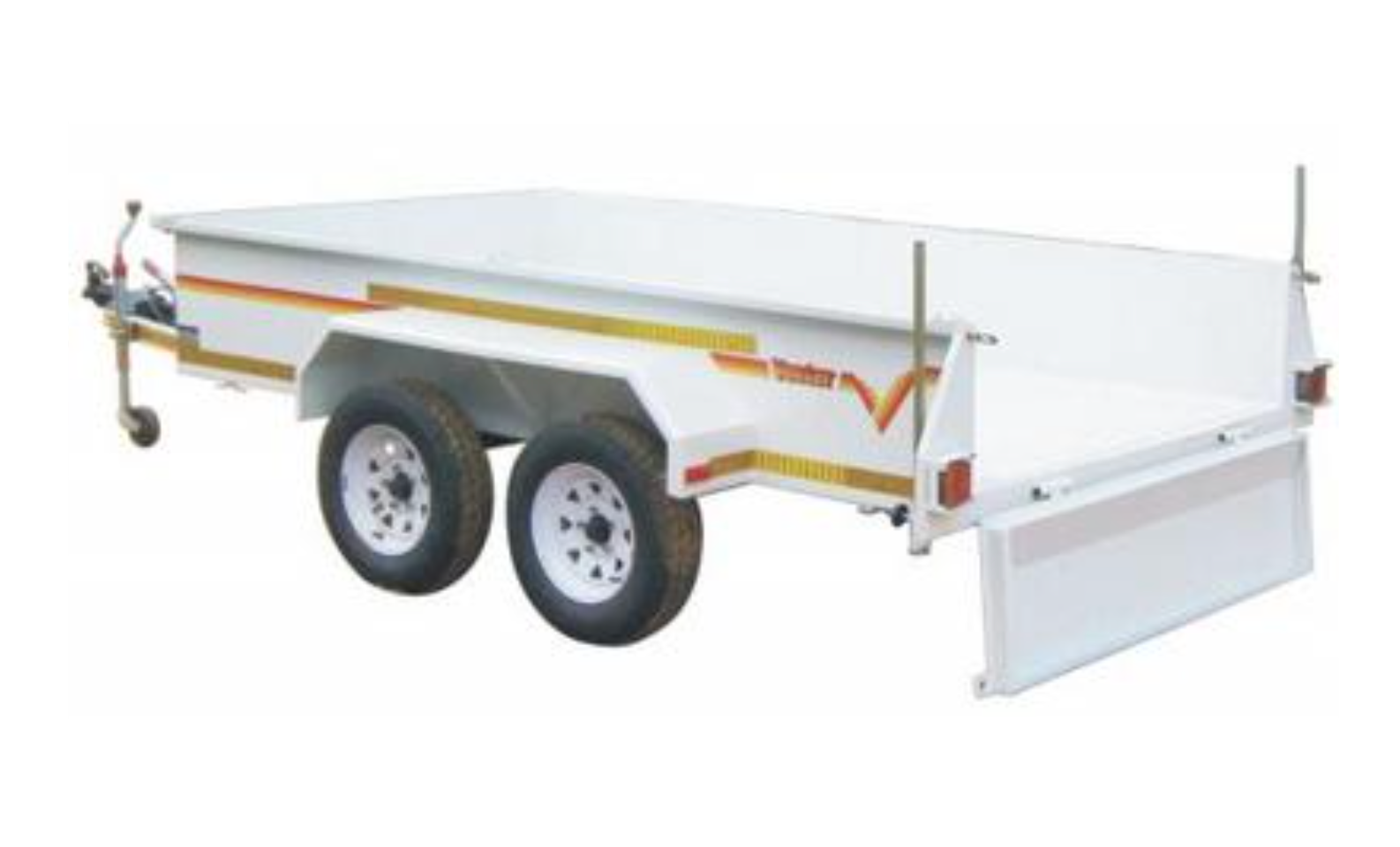
It is tempting to assume that two axles mean twice the load. On this unit they do not. Published payload is 1 000 kg on both builds, the same figure the manufacturer gives for its 3.0 m single axle deck. What the second axle buys is different and arguably more useful: the load is carried on four contact points instead of two, so the trailer pitches far less over a bad surface and is much steadier at speed on a crosswind. It also buys redundancy. A puncture on one wheel of a tandem leaves three wheels still carrying, which is the difference between stopping safely and dropping a loaded deck onto a rim.
Published specification
| Deck length | 2 400 mm |
| Overall length | 3 850 mm |
| Inside width | 1 520 mm |
| Overall width | 2 010 mm |
| Side height | 410 mm open, 1 200 mm railed |
| Overall height | 910 mm open, 1 700 mm railed |
| Ground clearance | 245 mm |
| Tare | 500 kg open, 550 kg railed |
| GVM | 1 500 kg open, 1 550 kg railed |
| Published payload | 1 000 kg |
| Brakes | Run-in brakes |
| Axles | 1 500 kg x 2 |
| Suspension | Rubber axle |
| Wheels | 165 x 13 inch open, 195 x 14 inch 6 stud railed |
| Spare wheel | 165 x 13 inch, included on both builds |
The two published builds
- With brakes: an open deck 410 mm high at the side and 910 mm overall, 500 kg tare, 1 500 kg GVM, on 165 x 13 inch wheels with 1 890 mm axles.
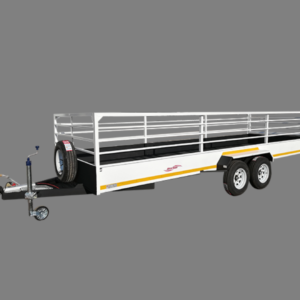
- With rails and brakes: 1 200 mm side height and 1 700 mm overall, 550 kg tare, 1 550 kg GVM, on 195 x 14 inch six stud wheels with 1 830 mm axles.
- Both builds are published with a 165 x 13 inch spare wheel included. On the railed build that spare does not match the published road wheel size, so treat it as a get-you-home item and ask us to confirm the fitment in writing.
- Suspension is published as rubber axle rather than a leaf pack, which is why the deck sits low and why the ride is quieter than a stiff-sprung trailer of the same rating.
Payload, GVM and licensing
Gross vehicle mass is published at 1 500 kg on the open deck and 1 550 kg on the railed one. Both sit far above the 750 kg mark at which a trailer must be braked, which is why run-in brakes are fitted on both. The combined axle rating of 3 000 kg is well above the gross figure, and that gap is engineering headroom, not extra permitted load. Licensing, towing capacity and marking requirements are set by the National Road Traffic Act, and the braked towing figure on your own vehicle plate governs what you may legally pull.
Where a short tandem makes sense
A 2 400 mm deck reverses and parks like a single axle trailer but behaves like a heavier one under load. That combination suits contractors working in tight yards, farm workshops moving pumps and gearboxes, and anyone towing dense material such as sand, brick or steel where the weight arrives long before the deck is full.
How it sits against its siblings
The 3.0 m tandem flatdeck gives 600 mm more body on the same twin 1 500 kg axles, at a 580 kg tare. If your loads are dense and short, the 2.4 m deck is the cheaper and more manoeuvrable unit. If they are bulky, go longer. Both live in our double-axle cargo trailers category.
What the extra money buys
Our budget range covers similar work at roughly half this price and is a sensible choice for occasional light towing. On this unit the money goes into things you can verify: a published tare and GVM for each build, brakes fitted at the factory rather than added later, two rated axles instead of one, and a spare wheel supplied with the trailer. Those are the items that keep a working trailer on the road rather than in the workshop.
Specifications
| GVM (kg) | 1500 kg, 1550 kg |
|---|---|
| Axle Configuration | Tandem braked |
| Braking | Tandem braked |
| Tare (kg) | 500 kg, 550 kg |
| Payload (kg) | 1000 kg |
| Deck Length (mm) | 2400 mm |
| Suspension | Rubber suspension |
| Tyre Size | 165 x 13 inch, 195 x 14 inch |
| Fitment | With brakes, With rails and brakes |

Reviews
There are no reviews yet.